Joyner, 2026 Jimmy A. Young Medal Recipient, Gives Back to Profession
October 5, 2026 | 11 min read

Listen to more about Dr. Joyner’s journey on the AARC Perspectives Podcast.
As it does every year, the Awards Ceremony at the AARC Congress in New Orleans, LA, this November will end with the bestowal of the Association’s highest honor. The Jimmy A. Young Medal goes to an individual who has exceeded all expectations for meritorious service to the profession and the patients it serves, and the list of winners reads like a who’s who of respiratory care.
This year the AARC is pleased to present the medal to a man who has embodied the spirit of the award through his career-long dedication to advancing the profession through clinical expertise, scholarship, and service.
An appealing combination
Like nearly all RTs of his generation, Robert L. Joyner, Jr., PhD, RRT, RRT-ACCS, FAARC, entered the profession with an associate degree in respiratory care and began working at the bedside, caring for patients struggling to breathe.
“I was initially drawn to respiratory care because it offered a remarkable combination of science, technology, and direct patient care,” said Dr. Joyner. “Early in my career, I found myself working with critically ill patients where respiratory therapists were expected not simply to perform procedures, but to understand physiology, recognize changes in a patient’s condition, and contribute meaningfully to clinical decision-making. That combination appealed to me.”
The value he saw in the care he provided matched his growing knowledge of the different directions he could take as an RT, and as the initial years of his career went by, he began looking beyond the bedside for opportunities in education, leadership, and research. He knew those transitions would require additional education, so within a few years, he began working toward his bachelor’s degree at Salisbury University in Salisbury, MD.
After completing it, he began his PhD in physiology at the Geisel School of Medicine at Dartmouth College in Hanover, NH.
“I have always believed that education expands both your opportunities and your responsibility to contribute,” said Dr. Joyner. “Each step gave me a different way of understanding the profession.”
The research he completed at Dartmouth for his dissertation is a great example. By examining the feasibility of using intravenous volatile liquids as selective pulmonary vasodilators — a study that brought together respiratory physiology, cardiovascular physiology, and experimental research — he learned not only how to ask a scientific question and investigate it rigorously but also the value of adding to the scientific knowledge on his topic.
“That progression naturally led me toward education and research,” he said.
Dartmouth Hitchcock Medical Center in Lebanon, NH, was the right place to begin the journey because RTs there were expected to participate in educating medical residents, along with research. “I came to see teaching, clinical practice, and research not as separate careers but as different ways of answering the same question: How can we take what we know and use it to provide better care?” said Dr. Joyner.
All the right stuff
The solid foundation he received in clinical skills at Dartmouth Hitchcock, coupled with his advanced degrees, made him an attractive candidate for RT educational programs.
Dr. Joyner joined the faculty at Salisbury University in 1998 and continued to serve the university in various capacities over the next 21 years, as both an educator and a researcher. After beginning as a clinical instructor in respiratory care, he climbed the ranks from director of clinical education, to director of the RT program, to chair of the Department of Health Sciences, to associate dean of the Richard A. Henson School of Science & Technology, to special assistant to the provost, to director of the School of Health Sciences.
In 2019, he was made Professor Emeritus of the university.
He has long seen the three pillars of the profession — clinical care, education, and research — as integral to his success.
“Education and research became the focus of my career because both have a multiplier effect,” he explained. “As a clinician, you can have an extraordinary impact on the patients you personally care for. As an educator, you can influence the care provided by generations of clinicians. Through research, you can potentially influence the care of patients you will never meet.”
Top achievements
Dr. Joyner accomplished much during his tenure at Salisbury, but he cites his work with the RT program, the opportunities he received to serve the wider health education community, and his involvement in research as his top achievements.
“At Salisbury University, one accomplishment of which I am particularly proud was helping develop and sustain a respiratory therapy program that ultimately received a ten-year CoARC reaccreditation — the maximum accreditation period available,” he said.
As department chair, associate dean, special assistant to the provost, and director of the School of Health Sciences, he got the chance to participate not just in teaching the next generation of health care providers but in building the educational systems that would serve them during their time in school.
In research, Dr. Joyner participated in studies ranging from respiratory physiology and mechanical ventilation to interprofessional education, health disparities, cancer care, clinical outcomes, and health systems research.
Perhaps most importantly, he proved that research does not belong solely to the major academic medical center. “Good questions occur wherever patients receive care,” he said. “My career has increasingly focused on giving clinicians the infrastructure, mentorship, and confidence necessary to turn those questions into scholarship.”
The mission continues
That mission is now playing out in his current role as director of the Richard A. Henson Research Institute, a position he took on in 2019 because it would allow him to build a sustainable culture of clinical research within a community health system, in this case TidalHealth Peninsula Regional Health System in Salisbury.
“My responsibilities include developing and integrating TidalHealth’s clinical research program, supporting investigators, overseeing quality and regulatory standards, and helping ensure that clinical trials are successfully executed from protocol concept through study completion,” he said. “But I view the Institute’s mission more broadly than simply conducting clinical trials.”
Dr. Joyner believes research is one of the mechanisms through which a health system learns, giving patients access to emerging therapies and allowing clinicians to ask questions arising directly from the populations they serve.
“Our work now intersects with graduate medical education, cancer research, health disparities, clinical trials, systematic reviews, and multisite collaborations,” he said.
He has also become particularly interested in creating pathways that allow clinicians, residents, and students in community health systems to participate meaningfully in scholarship. “At TidalHealth, for example, we developed a systematic-review process that produced six accepted international conference abstracts within its first six months,” he said.
Dr. Joyner represents TidalHealth on the Executive Council of the Johns Hopkins Clinical Research Network as well and serves as the research standards lead for TidalHealth’s Commission on Cancer activities.
“Ultimately, the purpose is straightforward — research should improve patient care,” he said. “If our work does not eventually benefit patients, through better treatments, better evidence, better-trained clinicians, or a better understanding of the communities we serve, then we need to reconsider why we are doing it.”
An active member since 1988
An AARC member for nearly 40 years now — he joined in 1988 while earning his AS degree from California College for Health Sciences and working as a staff RT at Calvert Memorial Hospital in Prince Fredrick, MD — Dr. Joyner has served the Association in a range of capacities.
In addition to presenting on education, evidence evaluation, research, tenure and promotion, and professional development at numerous AARC meetings, he played an integral role in national discussions on developing the Advanced Practice Respiratory Therapist.
“I believe strongly that respiratory therapists should practice at the highest level justified by their education, competencies, and evidence,” said Dr. Joyner.
He has helped the Association build a strong scientific basis for the profession through his role as a manuscript reviewer for the AARC’s science journal, Respiratory Care, since 2011, and he now sits on the Journal’s Editorial Board.
Dr. Joyner has also served as a solicited reviewer for selected ARCF Education Recognition Awards, helping to ensure deserving researchers are rewarded for their work.
“Those activities matter to me because a strong profession requires a strong scientific literature,” he said. “At this point in my career, helping identify, encourage, and create opportunities for the people who will lead respiratory care in the future may be among the most important contributions I can make.”
Throughout it all, he believes he’s gotten just as much as he’s given. “Whatever I have contributed to the AARC, the Association has given at least as much back to me,” said Dr. Joyner. “It provided professional relationships, mentors, opportunities to present ideas, exposure to perspectives beyond my own institution, and opportunities to participate in conversations about the future of respiratory care.”
Receiving the FAARC designation from the AARC in 2007 was particularly meaningful because he says it recognizes something near and dear to his heart – “contributions to the art and science of respiratory care.”
Making good on the promise
Some of Dr. Joyner’s biggest contributions to the profession as a whole, though, undoubtedly lie in his long-time service to the NBRC.
“My relationship with the NBRC has been one of the most meaningful professional experiences of my career,” he said. “I have served the organization since 2009 and was privileged to serve as its president in 2016 and 2017.”
During his presidency, long-time NBRC CEO Gary Smith prepared to retire, and Dr. Joyner led the search for his replacement, a task he says required the NBRC Board of Directors to “think carefully about leadership, governance, compensation, and the future direction of the organization.”
Under his guidance, the Board ultimately selected Lori Tinkler to transition into the position, and she remains CEO of the NBRC today.
Dr. Joyner also oversaw the development of a new NBRC branding campaign and participated in another campaign highlighting respiratory therapists who have earned the NBRC’s specialty credentials.
But he is most proud of what he believes are the less visible parts of the job — development and administration of national credentialing examinations through the Therapist Multiple-Choice Examination Committee, Clinical Simulations Committee, and Acute Critical Care Specialist Committee, along with service on ethics, advanced practice, examination admission, and international affairs committees.
“Credentialing is ultimately a promise to the public,” emphasized Dr. Joyner. “When we place a credential after someone’s name, we are saying that the individual has demonstrated a defined level of knowledge and competence. Helping protect the integrity of that process has always seemed to me an enormous responsibility.”
The NBRC has repeatedly recognized Dr. Joyner’s valuable role in the organization by awarding him its highest honors, including the Robert H. Miller Award in 2021, the Sister Mary Yvonne Jenn Lifetime Achievement Award in 2023, and the Steven K. Bryant Award in 2024.
He says each is meaningful to him because it came from an organization and colleagues whom he has the utmost respect for. But in the end, his greatest satisfaction comes from “knowing that the work contributed to maintaining the credibility of the RRT credential and advancing the profession.”
Although he has moved into roles outside traditional respiratory care, Dr. Joyner stresses that he is now and always will be an RRT. “I still consider myself a respiratory therapist first, regardless of the position I happen to hold,” he said.
More to come
Robert Joyner never thought he’d be walking up on stage at the end of an AARC Congress Awards Ceremony to receive the Jimmy A. Young Medal, but now that he knows that’s exactly what he’ll be doing on the afternoon of Nov. 14, he is using the occasion to reflect on his career and how he ended up where he is today.
“When you spend your career working in a profession, you rarely think about it in terms of accumulating accomplishments,” he said. “You think about the next student who needs help, the patient in front of you, the research question that needs answering, the manuscript that needs reviewing, or the committee meeting that needs your attention. The individual activities rarely feel extraordinary while you are doing them.”
To have the AARC look across the breadth and depth of his life’s work and consider it worthy of such an honor has been humbling, and he is grateful for all the opportunities he has had to make a difference for his profession.
But more than anything else, he is reflecting on the people behind those achievements. “Nothing meaningful in my career has been accomplished alone,” he said. “Students, patients, colleagues, mentors, research collaborators, respiratory therapists, and my wife and family have all contributed to whatever success I have had.”
He has also made a conscious decision to view this award not as the culmination of a long career, but as
a challenge to remain worthy of it.
“Respiratory care gave me a profession and then gave me opportunities far beyond anything I imagined when I first became a respiratory therapist,” said Dr. Joyner. “I feel an obligation to continue giving something back.”
He says he is looking forward to what comes next!
-

- Dr. Joyner says his two grandsons, Leland, left, and Jayce, right, are his true joys in life.

-

- It hasn’t been all work and no play for Dr. Joyner, as he enjoys a nice meal of Chesapeake Bay Blue Crabs whenever he gets the chance.

-
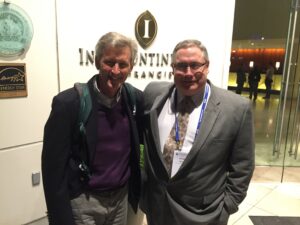
- Dr. Joyner, right, with his Dartmouth mentor, colleague, and lifelong friend James Leiter, MD.

-
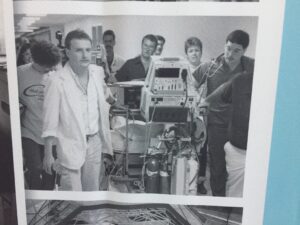
- A young Dr. Joyner, on the far left, helps to move equipment from Mary Hitchcock Hospital to the new Dartmouth-Hitchcock Medical Center early in his career.

-
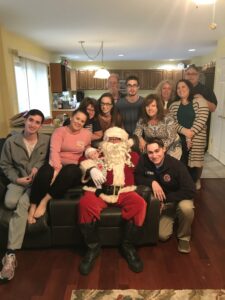
- Dr. Joyner’s large family has served as an important source of support throughout his remarkable career.


AARC
Related Articles
Explore our recent posts below.
Joyner, 2026 Jimmy A. Young Medal Recipient, Gives Back to Profession
Listen to more about Dr. Joyner’s journey on the AARC Perspectives Podcast. As…

2027-2028 Apex Designation Recipients Announced
The American Association for Respiratory Care (AARC) launched the Apex Recogniti…

2025 AARC Annual Report
The 2024 AARC Annual Report showcases how the goals defined by our 2022–2025 Str…
Joyner, 2026 Jimmy A. Young Medal Recipient, Gives Back to Profession
Listen to more about Dr. Joyner’s journey on the AARC Perspectives Podcast. As…
2027-2028 Apex Designation Recipients Announced
The American Association for Respiratory Care (AARC) launched the Apex Recogniti…
2025 AARC Annual Report
The 2024 AARC Annual Report showcases how the goals defined by our 2022–2025 Str…

The RT’s Role in the NICU
Respiratory complications are the primary reason infants are admitted to neonata…
The next step of your respiratory therapist journey begins now.
The AARC can help you discover your unique path and connect you with thousands of other dedicated RTs.